People ask how to become a recognized voice in their industry, as though there is a gate somewhere and someone at it. There is not. It is a process; it takes years, and the first stage is the one everybody wants to skip.
Write first, for nobody
Start with your own blog, where the stakes are zero, and nobody is watching. The point is not readership. The point is finding out which of your ideas survive contact with a blank page — and a surprising number do not.
Once you have a few pieces that hold up—based on your own experience and expertise —they become your pitch. That is exactly how I got “Getting to Yes, a business pitch for the music industry, published in Songwriter Magazine, and “How To Grow Your Business Effectively,” and “5 Tips for Cash Flow Funding,” published in Entrepreneur Magazine: I sent a pitch with existing work rather than just a proposal. If you want to be an authoritative voice, you need knowledge, expertise, and experience in the topic. An editor does not want to hear that you could write. They want evidence that you already do.
Then do something worth covering
You have to talk the talk and walk the walk, in that order but not far apart. In 2012 I went to India for a ninety-day project, and ended up staying there for six years. During that time, I met some locals and launched an outsourcing startup. That was the substance. The coverage followed: Small Business Enterprise Magazine put me on the cover with a two-page interview; they had a story to tell. Other features followed, including Silicon India Magazine naming Incognito Worldwide Startup of the Month; a few years later, I was profiled in an issue titled the Top 25 CEOs in India.
It is worth being clear about the direction of causation. The venture did not succeed because of the coverage. The coverage existed because the venture was doing something specific enough to write about.
Awards are a byproduct, not a strategy
Startup of the Year in 2014, Top 5 Most Promising Social Media firms in 20215, and Top 20 Most Valuable Consulting Companies in 2016 were just a few of the mentions my company has gotten over the years. Useful, and none of them were the goal. Awards feel good, validate a certain level of expertise, but on their own aren’t what lands business contracts that generate revenue. They don’t attract new customers looking for services; they merely enhance your reputation with those who do.
The invitations start arriving
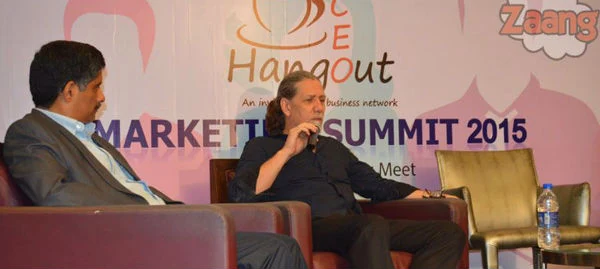
After the trade coverage, young professionals—resumes in hand—began showing up wanting to join our team. CEO Hangout asked me to be a featured speaker on their 2015 marketing summit roundtable discussion (depicted in the image above). The same was true in 2000 when I was asked to be a featured speaker at the Music Summit in New York City; the invitation was extended because, through the years I ran record labels, with certain levels of success — landing a review on the cover of Billboard Magazine, getting some of our artists featured in Teen Machine and Black Beat magazines, and solidifying national distribution, then international. I was invited because I walked the walk and achieved what the audience was seeking.
Those speaking engagements followed the writing exposure. The sequence almost never runs the other way. Nobody invites you to speak on the strength of your intention to have something to say. Many have asked me through the years why I write, and I tell them because I have things to say. Publications and speaking engagements came because the things I had to say had validity, proven over time.
The Hurdles
All of this requires either publishing insightful, experienced, or expertise-based things while you still feel underqualified to publish them. Focus on moving your ventures forward to prove your strategies are practical, not just conceptually brilliant. The failure mode is not writing badly. It is analyzing whether to write until the moment passes.
Life is short, so share what you know and ask what you don’t. That is most of it. The rest is just pushing forward, day by day, and getting stuff done.