Speaking
Forty-four years of building companies across logistics, music, film, publishing and technology — and the willingness to talk about the parts that did not work. I speak to founders, operators and marketing teams about building companies, building brands, and the unglamorous systems that hold both together.
What I speak about
Each of these is something I have written about at length, so you can hear the argument before you book it.
Entrepreneurship
Setup, goals, and the work of converting a vision into something practical — including the failure mode I see most often, which is founders who strategize themselves out of business before they ever build revenue. Read the argument
Building a company vs. a solopreneurship
These are different things structurally, and they scale differently. Neither one is wrong, but you should know which you are building, because the answer changes every hire and every system that comes after it. Read the argument
Branding
Customers buy what you sell. Evangelists buy why you do it, and why it should matter to them. Building the second kind is a different conversation, and most brand work never gets around to having it. Read the argument
Digital marketing
A landscape that has shifted under everyone with the arrival of AI — what still works, what quietly stopped working, and how to tell the difference without losing a year finding out. Read the argument
Protocol and process
Every system is built from two kinds of work: the foundational task you do once and the recurring task you do forever. Confusing the two is how a company ends up permanently busy and not moving. Read the argument
On stage
Three decades of rooms, in two industries that do not usually overlap.
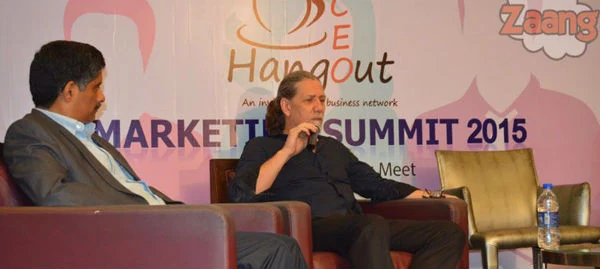
- CEO Hangout Marketing Summit · 2015
- Featured speaker, Bangalore — a panel on what was then still called digital marketing. I also contributed four bylined articles to CEO Hangout between 2015 and 2017.
- International Music Summit · 2001
- Featured speaker, New York City. I launched Fortune Entertainment in 1998 and sold it to the publicly traded IntermediaNet a year later, staying on as president of the label. National distribution came through Navarre; acquiring Ichiban Records, Ichiban International and Sky Records brought EMI distribution with it. By that summer I was co-CEO of the parent company.
Those rooms opened because of the label years behind them. None of what follows is a speaking credit; all of it is why the invitations came.
Big City Records, the label I launched in 1986 as CSI Entertainment and distributed through Schwartz Brothers, carried MC Cheese, Nick D (Soul King) and City-E. In the late eighties they opened for KRS-One at Newark Symphony Hall and, the same year, for EPMD at the Strand Theater in Plainfield, New Jersey.
In August 1991 Big City was one of seven independents whose acts were invited to perform at Jack the Rapper, on the same bill as Cypress Hill and Naughty by Nature. The invitation followed a glowing review of the act on the cover of Billboard, in the Rhythm & Blues column — that review is why we were asked.
In the nineties, my label Upfront Records provided the featured act for the International Music Summit in Memphis, Tennessee.
Fortune Entertainment released two records that fall — Byrdman, and DJ Smurf’s Non-Stop Booty Shake, which climbed the record pools to No. 9 in Atlanta and No. 1 in Pensacola, Florida, and sold $100,000 in its first week. I resigned in early 2000 over the direction and management of the parent company.
On the way out I wrote a marketing plan and coached DJ Smurf — Michael Crooms — on launching a group he had produced. The Ying Yang Twins went out on his own ColliPark label, picked up Universal distribution on the back of early success, and went platinum.
Formats
- Keynote
- Thirty to forty-five minutes on one argument, built for a room that has heard the optimistic version already. I would rather leave people with one thing they will act on than five they will forget.
- Panel or fireside
- The format I have done most, and the one where the honest answers tend to come out. I am comfortable disagreeing with the other people on the stage.
- Podcast or interview
- Remote or in person. Long form suits this material — most of it is stories with a point attached, and the point takes a few minutes to arrive.
- Workshop
- Half a day with a founding team, working on their business rather than on mine. Smaller rooms, fewer slides, more arguing.
Booking
Tell me the audience, the room and what you want them to do differently afterward. If I am not the right person for it I will say so, and will usually know someone who is.