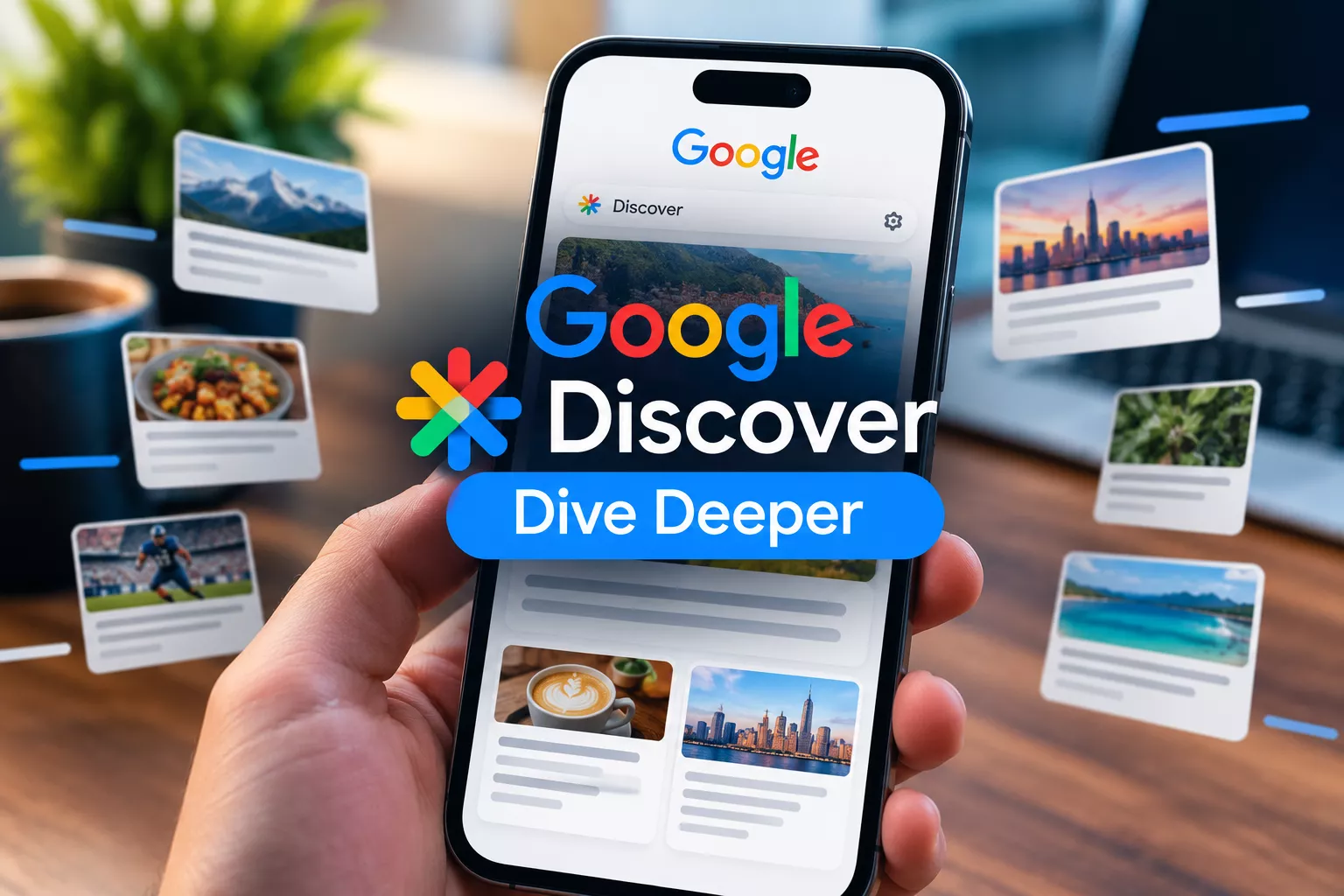
On September 20, Search Engine Land reported that Google is testing a feature called “Dive deeper” inside Google Discover. Tap it, and you get an AI-written overview of the topic in the feed, in the space a publisher’s card would have occupied. Google’s Robby Stein announced it on X, describing an overview with “prominent links to related stories” alongside community reactions. It is testing on videos first and will widen from there. Search Engine Roundtable was still working through the implications on 25 September.
Barry Schwartz’s read was that Discover has been one of the last large sources of Google traffic that still reliably sent people to websites, and that those days are now numbered. I think he is right, and the more useful point is that none of this should surprise anyone who’s been paying attention.
The pattern is now a decade old and entirely consistent. A platform builds an audience by sending people elsewhere. Once the audience is habitual, the platform stops sending them elsewhere and answers in place. It happened to the ten blue links. It happened to Facebook pages. It is happening to Discover. The prominent links are not a consolation; they are the step before the links get smaller.
So the question for an owner-operator is not what to do about Dive deeper. You cannot do anything about Dive deeper. The question is how much of your business currently depends on a channel that can decide, on a Tuesday, to keep the click.
Work it out properly, not in your head. Take last quarter’s inquiries and sort them by where the person came from. Then put each source into one of two columns. In the first column, the attention you rent: search, Discover, social feeds, anywhere an algorithm sits between you and the person. In the second, the attention you own: your email list, your phone, people who were referred to you by name, customers who buy again without being reminded.
Most small firms who do this exercise honestly find the rented column is far larger than they assumed, and that the owned column is not a list at all but a handful of relationships held in one person’s head. That is a fragile business wearing the costume of a stable one.
The fix is slow, and it is not clever. Every piece of rented attention you get should be spent buying a small piece of owned attention. Someone arrives from a feed, reads something useful, and leaves an email address. That is the entire mechanism. It converts a visit you were lent into a contact you keep. It is unfashionable because it takes two years to matter, and it matters enormously when a platform changes its mind, which it will.
There is a second-order effect worth naming. If AI overviews increasingly answer the general question, the traffic that still reaches a website will skew toward the specific one — the person who needs your town, your price, your availability, your judgment on their particular problem. That is worse for publishers selling impressions and better for firms selling work. Fewer visitors, further along. Write for that person rather than for the top of the funnel, because the top of the funnel is being served by the machine now.
This is the argument at the center of Engagement: that reach is the easiest number to inflate and the least useful to own, and that a smaller audience you can actually contact beats a larger one you are permitted to borrow. Google has just given every business owner another reminder. The ones who act on it will not notice the next change at all.